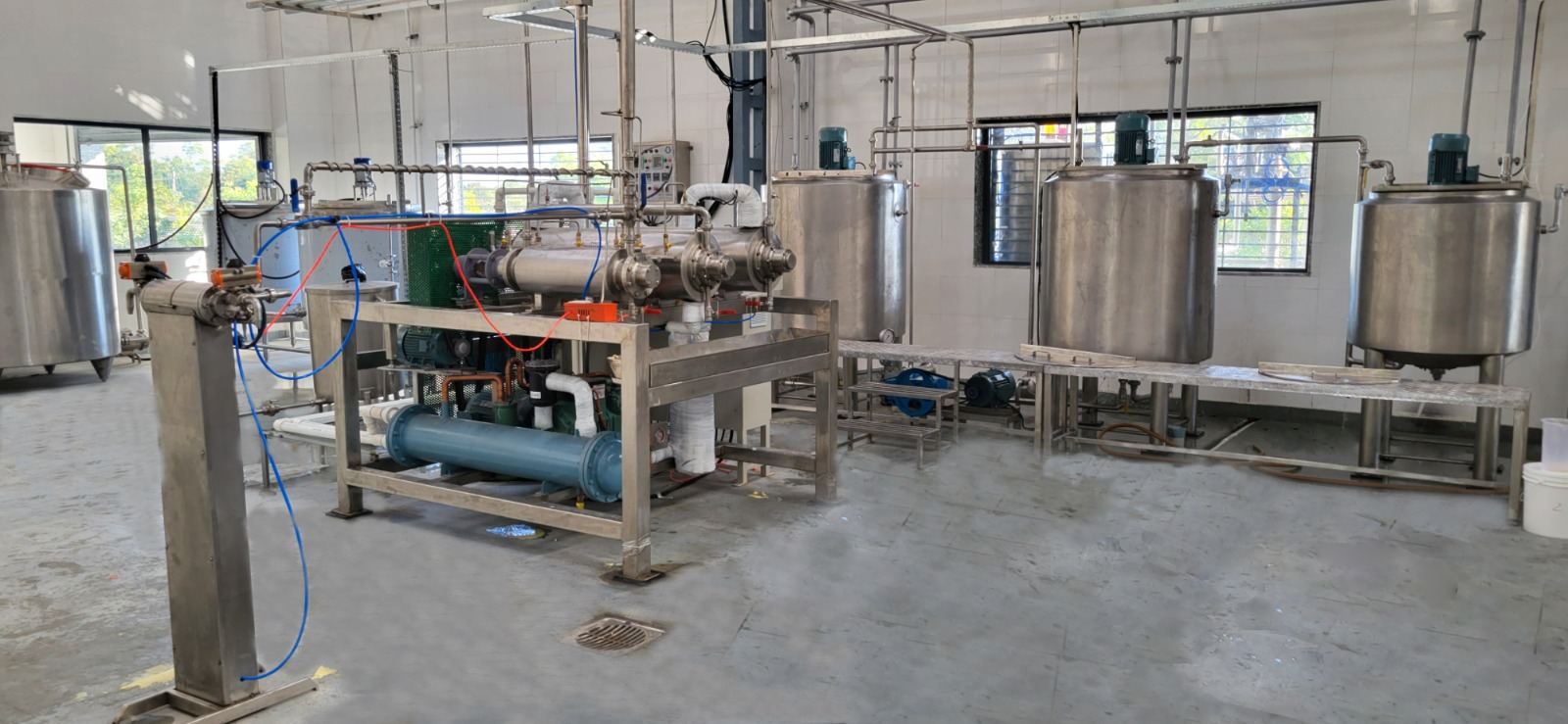
1. Raw Materials Preparation
TANK1:
Oils and Fats: Different oils (like palm oil, soybean oil, or sunflower oil) are mixed to achieve the desired fat blend.
TANK2:
Water Phase: Water, salt, emulsifiers, and other additives (like preservatives and flavor) are prepared.
TANK3:
Material of tank1 and tank2 are mixed in tank3.
2. Oil and Water Emulsification
The oil phase and water phase are heated separately.
Both are mixed together in an emulsification tank.
The mixture is homogenized to ensure proper blending and fine emulsion (usually oil-in-water).
3. Cooling and Crystallization
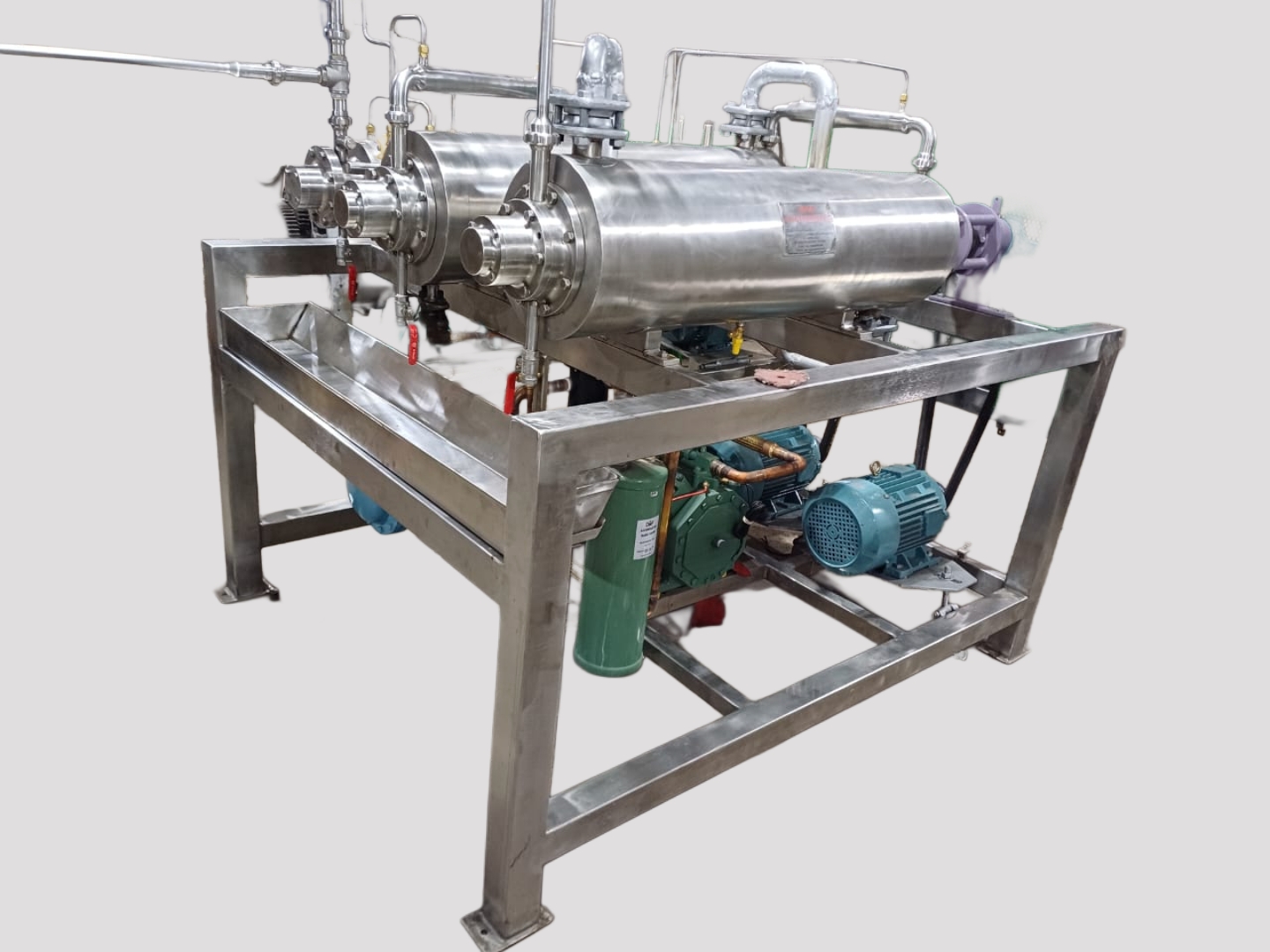
The emulsion is passed through a chiller (scraped surface heat exchanger).
Rapid cooling forms small fat crystals, giving margarine a smooth texture.
4. Kneading and Texturizing
The cooled margarine is worked (kneaded) to develop proper texture.
Additional ingredients like flavoring or color can be added at this stage.
5. Packaging
The finished margarine is filled into tubs, wrappers, or blocks.
Packaging is sealed and labeled.
.jpg)